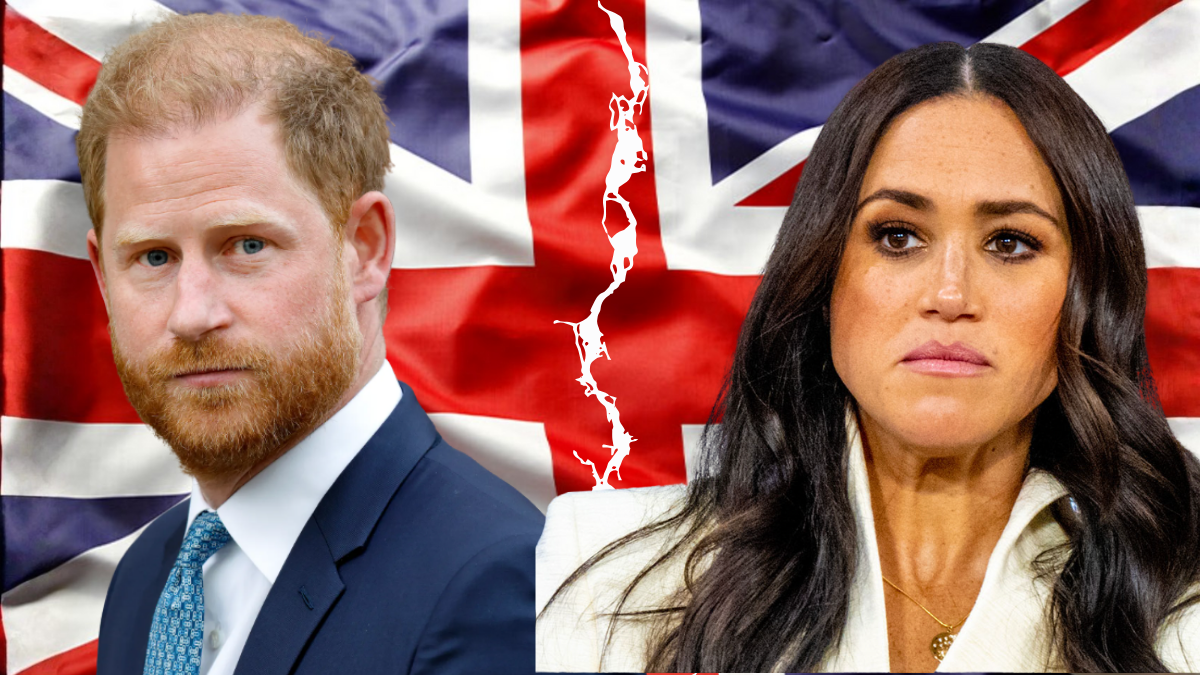
In recent days, several media outlets have reported that Buckingham Palace is quietly preparing contingency arrangements in the event of a marital breakdown between Prince Harry and Meghan Markle. According to insiders cited in publications such as The Economic Times, Geo News and Masala, the palace is concerned about the potential risk to the monarchy’s image — and is thus working on a multi-layered “what-if” strategy.
The impetus reportedly stems from diverging personal objectives: Prince Harry is said to favour returning to or spending more time in the United Kingdom, while Meghan Markle is described as reluctant to relocate from the United States. That divergence, the reports say, is perceived as a serious risk-factor for the palace.
What follows is a detailed breakdown of the substance of the reports, the motivations behind them, their caveats and what to watch next.
What the Reports Say
The Trigger: Differing Plans and Potential Fractures
The media claims point to increasing friction over residence and role. In particular, one report states: “Prince Harry’s September visit to the UK was largely praised … he is reportedly keen to relocate permanently. However, Meghan Markle is ‘extremely upset’ in regard to the idea, favouring remaining in the U.S.” The palace, according to the same article, has “stepped in, making ‘contingency plans’ in case the pair separates.”
Another piece describes a scenario where schooling, residence, custody and travel permissions of the couple’s children — Prince Archie of Sussex and Princess Lilibet of Sussex — are being “pre-mapped” to avoid a “messy tug-of-war” in the tabloids.
The Contingency Framework: What’s Being Planned
According to insiders quoted in the articles, the palace’s planning includes the following elements:
- A structured settlement or “golden handshake” in the event of a separation. One source states: “The Palace is quietly drawing up contingency plans… The thought is that Harry might push for a return to the U.K., but Meghan won’t want to come back from the U.S. and that schism is potentially dangerous.”
- Retention of Meghan’s title (for example, maintaining the Duchess of Sussex designation) even in the event of separation. This is characterised as a “face-saving” measure to avoid a public war over titles.
- A gag clause or non-disclosure covenant guarding against future revelations or public “tell-alls” that might damage the monarchy’s narrative. According to the report: “It would include a strict gagging order designed to prevent further exposés of private life. It’s like with Princess Diana all over again…”
- Detailed planning covering the children’s future: who will live where, how schooling is managed, travel permissions until age 18, and custody arrangements. “Schooling, where they live, custody and travel permissions would all be agreed upon until the age of 18,” one insider is quoted as saying.
Palace Motives: Risk, Narrative, Reputation
The reports suggest that the palace is motivated by concern over reputational risk. The logic appears to be that a high-profile split, especially one involving media exposés, children, travel jurisdiction (U.S./UK) and title disputes, would be a potentially major PR challenge. One insider says: “It’s about controlling the narrative and protecting the monarchy.”
Additionally, the palace is reportedly conscious that if Harry appears to be blocked from returning to his homeland or if Meghan is cast as the unwilling party, public sympathy might shift — thereby turning what might have been a private matter into a public relations problem.
Why It Matters
The Monarchy as Institution
The British monarchy is not merely a private family matter; it is a public institution whose legitimacy and stability depend in part on public perception. A breakdown in a high-profile royal marriage can generate a cascade of media scrutiny, legal complications (especially across jurisdictions), and narrative risk. The reports indicate that Buckingham Palace is aware of this risk and is acting pre-emptively.
The Celebrity-Royal Dynamic
Harry and Meghan’s lives span not only the royal household but also celebrity culture, media production (documentaries, memoirs), and global public interest. That context elevates the risk: this is not simply a domestic separation, but one that could yield significant media content, leaks, contractual disputes, and reputational damage.
Children, Titles, and Jurisdictions
Including the children’s future in these plans reflects the complexity: Archie and Lilibet are minors, with cross‐Atlantic residence possibilities, and their treatment will matter both at a personal level and a public one (media interest in royal children is high). Titles and their retention (e.g., Duchess of Sussex for Meghan) represent another symbolic front: removing a title could spark public backlash; maintaining it may reduce spark but still raises questions of role, duty and public expectation.
What We Don’t (Yet) Know — and Why Caveats Apply
Despite the detailed claims, there are important caveats:
- No official confirmation: Buckingham Palace has not publicly acknowledged that such contingency plans exist in the form reported. The stories rely on insider or “palace aide” sources. Masala
- Unclear legal status: The structure of any “settlement”, the enforceability of any gag clause across jurisdictions (UK vs U.S.), and the exact arrangements for children’s custody/travel are not publicly detailed.
- Probability vs possibility: The reports describe “contingency plans” – what would happen if a separation occurred — not necessarily that one is imminent.
- Media-sensational risk: Given the intense public fascination with the royal family and the celebrity status of Harry and Meghan, there is a risk that media reports may emphasise drama or speculation rather than verifiable fact.
Possible Scenarios Derived from the Reports
Based on the media accounts, we can outline several scenarios that Buckingham Palace might be preparing for:
- Scenario A: Amicable resolution, no split
If Harry and Meghan negotiate a mutually acceptable arrangement (maybe a compromise on residence, joint duties, or flexible travel), then the contingency plans may remain unused. The palace’s planning in this case functions purely as insurance. - Scenario B: Split with structured settlement
Should the marriage end, the palace’s reported plan anticipates a structured settlement: Meghan retains her title, a financial arrangement is agreed, gag clauses are in place, and the children’s residence/education is mapped out. The aim would be to limit media damage and maintain institutional continuity. - Scenario C: Split with public dispute
The worst-case (from the palace’s perspective) is a messy separation involving public fights over titles, children’s location or custody, media revelations, and cross-jurisdictional legal suits. The contingency plans appear designed to reduce the likelihood of this outcome, but cannot guarantee prevention.
What to Watch Going Forward
Several developments could provide signals about how this story evolves:
- Official statements from Buckingham Palace, or from Prince Harry or Meghan Markle, concerning residence plans, roles in the UK vs US, or status of titles.
- Legal filings or trust disclosures that reference title usage, settlement terms, or jurisdictional arrangements (e.g., whether any U.S.-based agreement exists).
- Media leaks: Documents or reports about children’s schooling/travel rights, settlement drafts, or internal palace memo leaks might indicate the plans are advancing.
- Residency announcements: If Harry announces a more significant UK-based role or Meghan publicly confirms a US country-base, that might mark deeper divergence.
- Public sentiment and media framing: How the British public and tabloid media respond to any perceived conflict or alignment in the couple’s future. The palace appears sensitive to narrative and public sympathy.
Broader Implications
The reports raise several broader questions:
- Institutional adaptation: Is Buckingham Palace evolving its approach to high‐profile royals whose lives span continents and celebrity domains? The contingency planning suggests yes.
- Title and role evolution: The suggestion that Meghan may retain her Duchess title even if separated raises questions about how royal titles will be managed in future non-traditional scenarios.
- Children’s status and global upbringing: With Archie and Lilibet straddling U.S. and U.K. cultures, the children’s schooling and residence highlight the way royal offspring may increasingly navigate global identities.
- Media control and narrative risk: The palace’s planning emphasises narrative control (gag clauses, structured settlements) — a reflection of lessons learned from prior royal crises and the modern media environment.
Conclusion
In summary, the widely reported claims that Buckingham Palace is drawing up contingency plans in the event of a split between Prince Harry and Meghan Markle underscore the institution’s heightened awareness of the complex risks posed by modern royal life. According to the reports, these plans cover everything from title retention, settlement structure and gag clauses to detailed schooling, travel and residence arrangements for the couple’s children. Although no official confirmation has emerged, the story reveals the monarchy’s pragmatic effort to anticipate scenarios that could otherwise generate embarrassment, media storms or reputational damage.
As with any such leak-driven royal story, definitive conclusions are premature. The palace may never use these plans. Yet their very existence – as reported – hints at changing royal protocols for a new era in which global mobility, celebrity status and institutional image converge.